Key takeaways
- Most HMO tenants – professionals and students alike – now expect a double bed, and rooms with singles are usually harder to let.
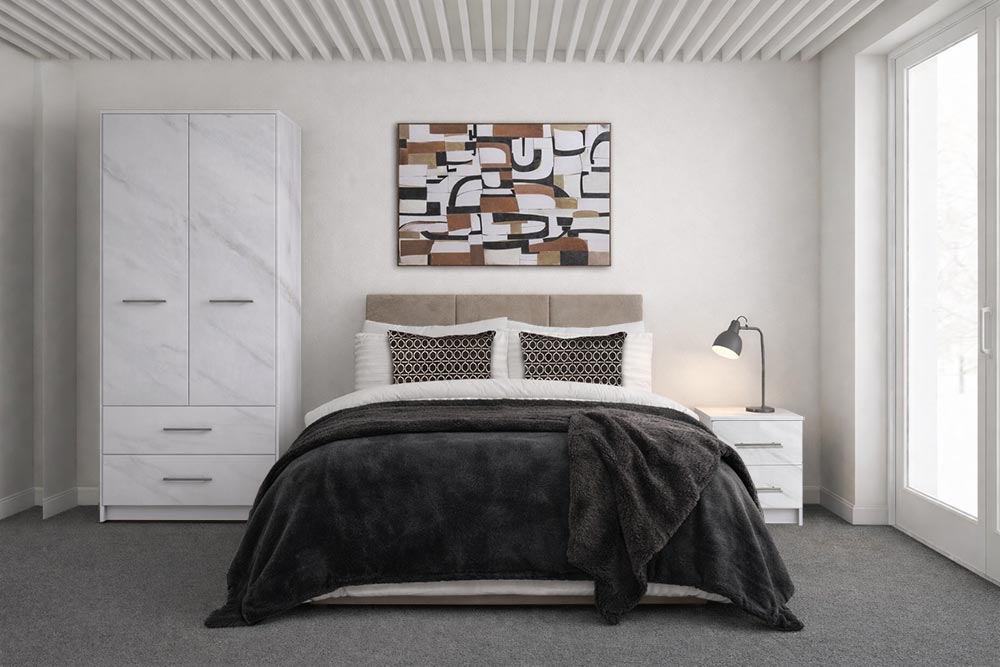
- A 4ft small double fits most rooms that meet the 6.51m² minimum and is 15cm narrower than a 4ft 6in double.
- A double bed with base, mattress and headboard is £349 + VAT, only £50 more than a single at £299 + VAT.
- Your council's licence conditions come first – check room-size rules and whether a room is let to one person or two.
The short answer
For most HMOs, choose a double. Tenants in a shared house are paying for a room that has to work as their bedroom, living space and office, and a double bed makes that room feel like a proper home. Singles still have a place in a few situations, which we cover below – but if you're furnishing a house to let to young professionals or students, a double is the safer bet.
Whichever you choose, the first rule is the same: the room must meet your council's minimum size once the furniture is in. See our guide to HMO furniture requirements for the full checklist.
Room size comes first
In a licensed HMO in England, a bedroom for one person over 10 must be at least 6.51m², and 10.22m² for two people. Many councils set larger minimums, and they usually only count floor space with a ceiling height of at least 1.5m. A double bed in a room that only just passes will leave little room for anything else – so the bed size and the other furniture need planning together.
- Under about 7m² – a 4ft small double with a storage base and a combi wardrobe is usually the best fit. A single only makes sense if the room is genuinely tight.
- Around 8–10m² – a 4ft 6in double with a wardrobe, chest, bedside and a desk fits comfortably.
- Over 10m² – a double leaves room for a desk and seating area, which supports a higher rent.
Always check your licence. Room-size standards and conditions on how many people can sleep in a room vary between councils. Check with your local authority before you buy furniture, and remember that a double bed doesn't change how many people the room is licensed for.
What tenants expect
Today's HMO tenants are often working professionals, postgraduates and students who are used to a double bed. The room is their private space, and a single bed can feel like a box room or a hostel. In practice, landlords tell us that rooms with doubles:
- attract more enquiries and photograph better in listings,
- justify a higher rent than the same room with a single,
- suit longer stays, because tenants feel settled.
We don't want to overstate this – the effect depends on your area and tenant type – but a double is rarely a disadvantage, and a single often is.
The 4ft small double
If you're torn, the 4ft small double is the compromise that works for most landlords. It's 15cm narrower than a 4ft 6in double and takes up around 2.3m², but tenants still see it as a double bed. Our standard HMO bed bases come in 4ft or 4ft 6in so you can match the size to each room, even within the same house. For more ideas on making small rooms work, read our guide to small HMO room ideas.

What does a double cost compared with a single?
Less than most landlords expect. Our complete beds include the bed base, a semi-orthopaedic mattress and a headboard:
| Bed | Single (3ft) | Double (4ft / 4ft 6in) |
|---|---|---|
| Hampton | £299 + VAT | £349 + VAT (4ft 6in) |
| Latchmere | £299 + VAT | £349 + VAT |
| Mini Bridgemore | £329 + VAT | £370 + VAT |
On our standard beds a double costs about £50 more than a single. If a double lets the room for even a little more rent each month, or fills it a few days sooner, the difference is quickly recovered. Our complete HMO room packs start from £679 + VAT and all include a double bed.
Bed upgrades worth considering
- Storage bases – an open storage base is £29 + VAT and a base with covers £49 + VAT. Drawers are available from £25 + VAT for one drawer. In a small room, these can replace a chest of drawers.
- Waterproof mattress – £20 + VAT extra on a double, a sensible protection for a high-turnover room.
- Pocket sprung mattress – £120 + VAT extra on a double, for rooms aimed at the top of your market.
- Fold-away guest bed – £199 + VAT, 2ft 6in wide and 5ft 9in long, if you want a spare sleeping option.
Remember that all upholstered beds, headboards and mattresses must meet the furniture fire safety regulations and keep their labels.
When singles still make sense
- Genuinely tiny rooms that only just meet the minimum size.
- Short-term or budget lets where tenants expect the cheapest rent and nothing else.
- Supported or managed accommodation, where the provider's specification calls for single beds – see our social housing packs.
- Rooms shared by choice, such as twin rooms – check your licence and the room-size rules first.
If you're unsure, send us your floor plan and we'll recommend a bed size for each room.
Frequently asked questions
Should HMO bedrooms have double beds?
In most markets, yes. Professionals and students generally expect a double, and rooms with single beds are usually harder to let. Check your council's room-size standards first.
What is the smallest double bed for an HMO?
A 4ft small double. It's 15cm narrower than a 4ft 6in double, takes up around 2.3m² and fits most rooms that meet the 6.51m² minimum size.
How much more is a double bed than a single?
On our standard beds, about £50 more. A Latchmere single with base, mattress and headboard is £299 + VAT and the double is £349 + VAT.
Does a double bed mean two people can live in the room?
No. How many people a bedroom can be let to is set by your licence and the room size, not by the bed. A room must be at least 10.22m² in England to be licensed for two people, and some councils set higher limits.